
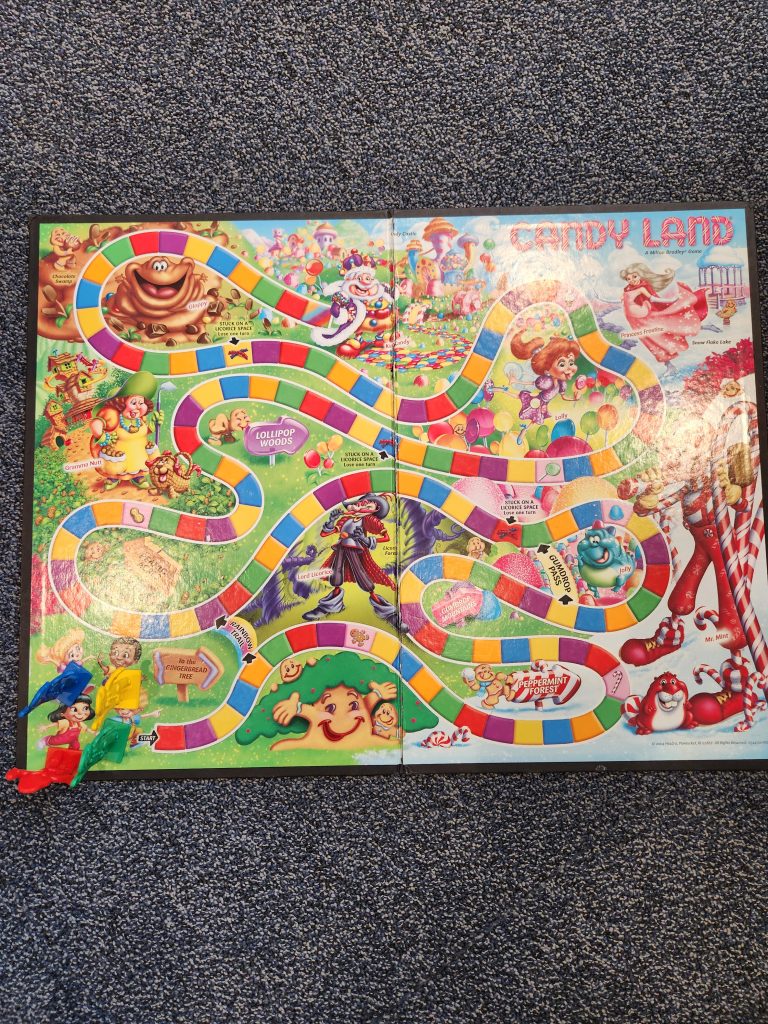
Candy land is a classic children’s board game known for its simplicity and fun while providing a variety of benefits to our younger kiddos. If you have found that your kiddo’s have “outgrown” Candy land, pull that boardgame back out! Learn some adaptations to continue the enjoyment of Candy land while challenging a wider age range of players.
Benefits of Playing Candy Land
- Understanding colors and matching: Learn to recognize and match colors while advancing colored pieces along the board.
- Turn taking: Learn basic turn taking etiquette including patience while waiting for turns.
- Counting skills: Learn counting by counting the spaces a player moves.
- Directionality and sequencing: Learn concepts of up, down, side, over, left, right while sequencing the token in the correct direction and order.
- Fine motor skills: Picking up one card at a time and pinching tokens to advance along the board work on finger control and coordination.
- Visual attention: To be present and visually aware of the game play and when to take turns. Working to visually attend to and discriminate between all the colors when advancing pieces.
- Spatial awareness: Being aware of the body in relation to the boardgame and others playing. Being spatially aware of game pieces and colors to find upon taking turns.
- Social interactions: Playing with others helps children learn social interaction and communication skills.
- Cognitive development: Learning patterns, rules, sequencing, and understanding the cause and effect through gameplay.
- Winning and losing: Understanding the concepts of winning and losing while teaching our kiddos to cope with differing outcomes, in relation to self and others.
Candy Land Adaptations
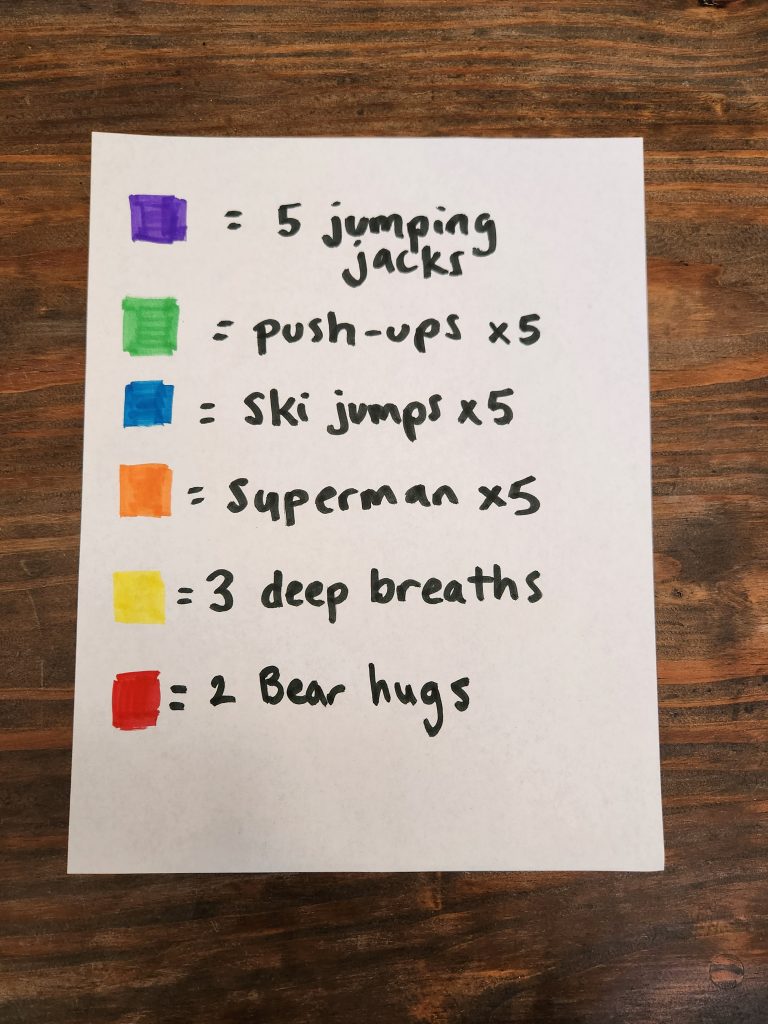
Incorporate physical activity into your Candy Land game.
- Make a visual chart showing the activities that you want to incorporate.
- Add some regulating activities into the mix such as breathing and deep pressure.
- Make a chart using paper and markers or use a whiteboard to easily erase & add movements to adjust numbers.
- Laminate visual charts using dry erase markers to adjust repetitions of the movements.
- Incorporate reflex integration, coordination, or exercises movements.
- Be creative utilizing equipment or space you have such as doing animal walks down the hall, using a trampoline, balance steps, or ball throws.
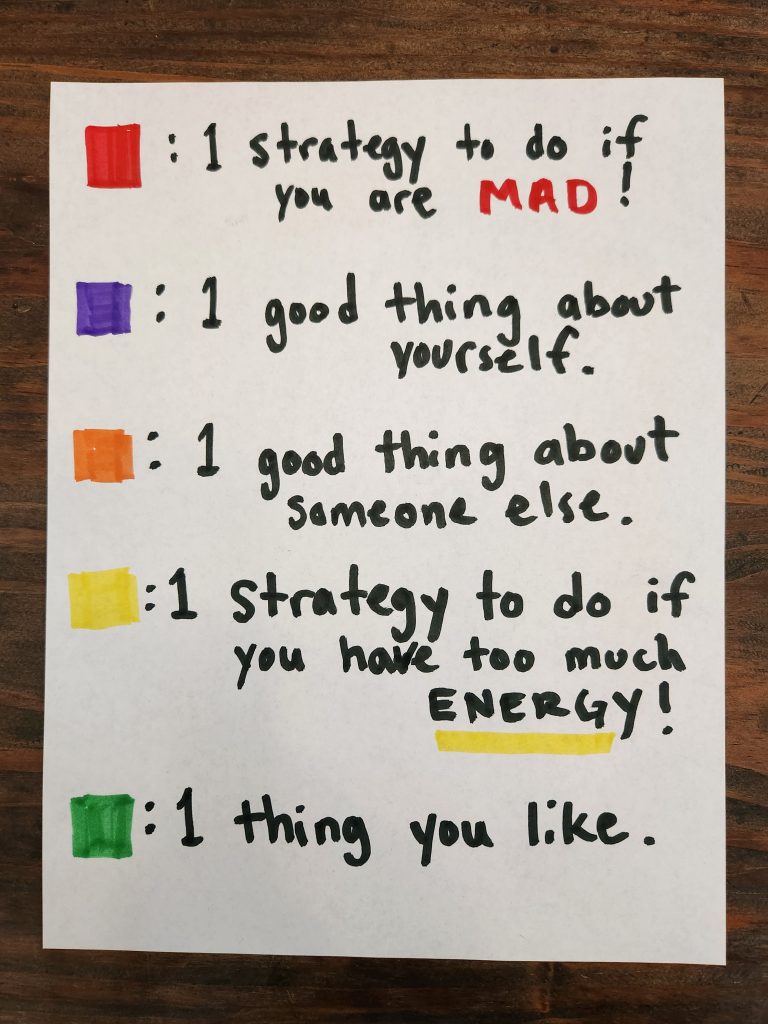
Incorporate self-awareness and regulation into Candy Land.
- Correlate colors with questions to answer in regard to self-awareness and regulation.
- Use a whiteboard to easily add or interchange new questions.
- Ask questions about different feelings your kiddos have experienced.
- Ask questions about coping strategies to use when experiencing different emotions.
- Ask questions about interests, positive characteristics, and happy moments to encourage positive self-concept and confidence.
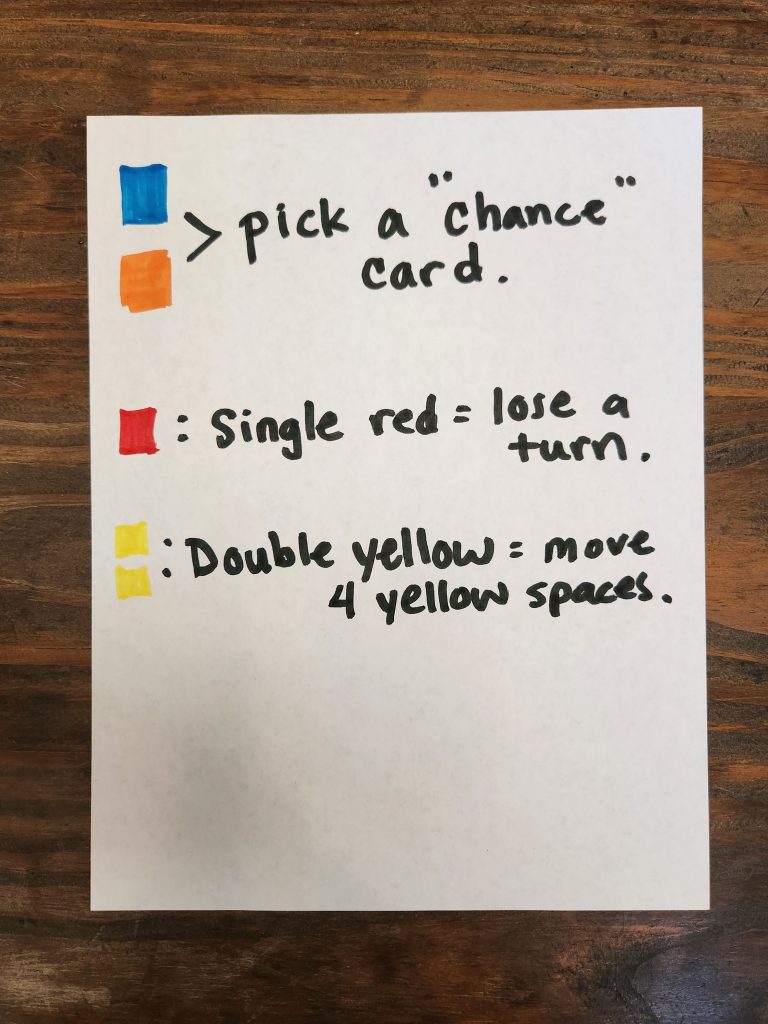
Introduce Strategy and Choice into Candy Land.
- Make your own “chance” cards with different outcomes, picking a card when landing on a specific color.
- Move forward or backwards a set number of spaces.
- Lose a turn.
- Jump to a specific “candy” spot.
- Switch game pieces with another player.
- Designate certain colors or cards to have a specific outcome.
- Make a visual chart to understand the rules.

Add bonus paths to Candy Land.
- Form paths and tape them to the current board, making “offshoots” of the current path.
- Draw and add different routes to change the game up.
- Provide different directions to work on decision making skills.
- Alternate routes at the beginning, middle, and/or end of the game.
- Add your own obstacles or challenges to the paths you make.
Educate, engage, and challenge your kiddos as they journey along through peppermint forests and gumdrop mountains. Adapting and bringing your own twists to Candy Land is like adding extra sweetness to this classic boardgame. Have fun and be creative by making Candy Land “new” again, catering to young and old alike.
No responses yet