
For children, understanding and managing emotions can be a challenging journey. They may struggle to identify their feelings, express them appropriately, and know what to do when certain emotions arise. One helpful tool that can be used is a color-coded visual chart. This type of chart helps children understand their emotional states and regulation levels by associating different colors with different feelings and regulation levels. Providing visuals can bring simplicity, minimizing the over-explaining that can often overwhelm kiddos. Understanding emotions is key, so let’s go over how to make a visual chart.
1. Choose Colors and Emotions

- Green: Can represent a calm, relaxed, and regulated state.
- Blue: Can represent emotions with low energy such as being tired or sad.
- Purple: May represent feeling worried, anxious, nervous, or scared.
- Yellow: Can Indicate a feeling of being silly, excited, frustrated, or overwhelmed.
- Orange: May represent a heightened state of anxiety, anger, or frustration.
- Red: Can indicate a feeling of being extremely overwhelmed, angry, or out of control.
Simplicity is the key. Many colors do not need to be used, only use between 3-5 colors. Make it together with your kiddo so they can have input in relating colors to feelings. Correlate colors to favorite movie characters or to emotions that certain characters may portray.
2. Create the Chart

- Use a large piece of paper or a whiteboard to create the chart.
- Draw a circle or square for each color, with the color representing the corresponding emotion.
- Write or draw pictures of common feelings and behaviors associated with each color. For example, green might include images of a child smiling, playing, or relaxing. Orange might include images of a child frowning, feeling frustrated, or having a tantrum.
- Laminate the visual chart for durability and longevity. Laminator and Laminating sheets.
- There are many ready-made options for purchase out there, but we want to also provide ways to help you create visual charts on your own. If interested, you can check out a few of these purchasable options. Emotion chart for kids, Feelings chart for kids, The Original Mood Flipbook for Kids.
3. Introduce the Chart
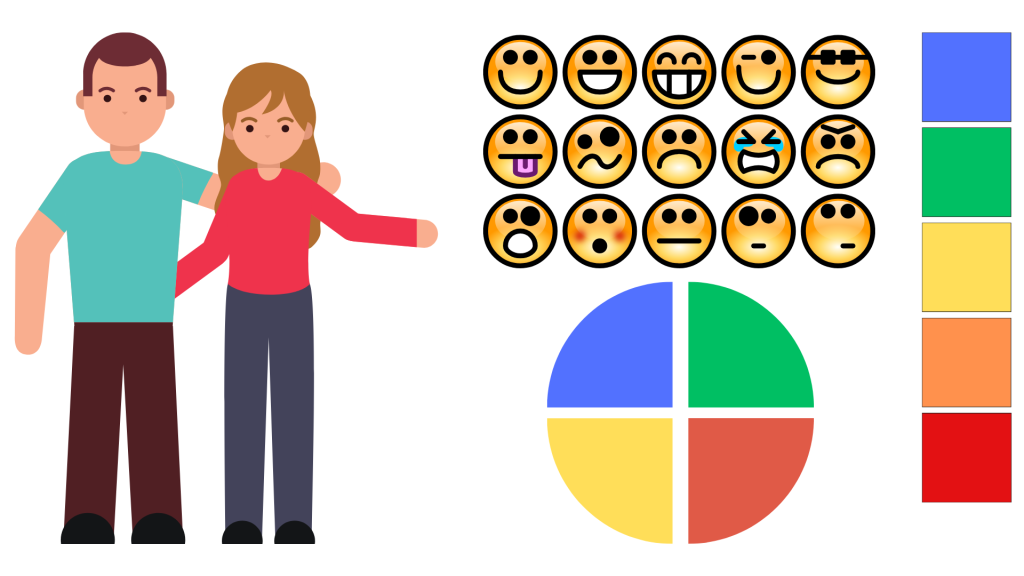
- Explain the chart to the child in a simple and age-appropriate way.
- Help them understand that each color represents a different feeling.
- Let them know that there are no “good” or “bad” emotions. Feelings are experienced by everyone and it’s okay to experience all emotions.
- Emphasize that the chart is a tool to help them identify their feelings and energy/regulation levels. Coping strategies can be a “next step” in teaching your kiddos about their emotional awareness and regulation. For now, let’s focus on using the visual emotion chart to help your kiddos identify their feelings.
4. Use the Chart Regularly
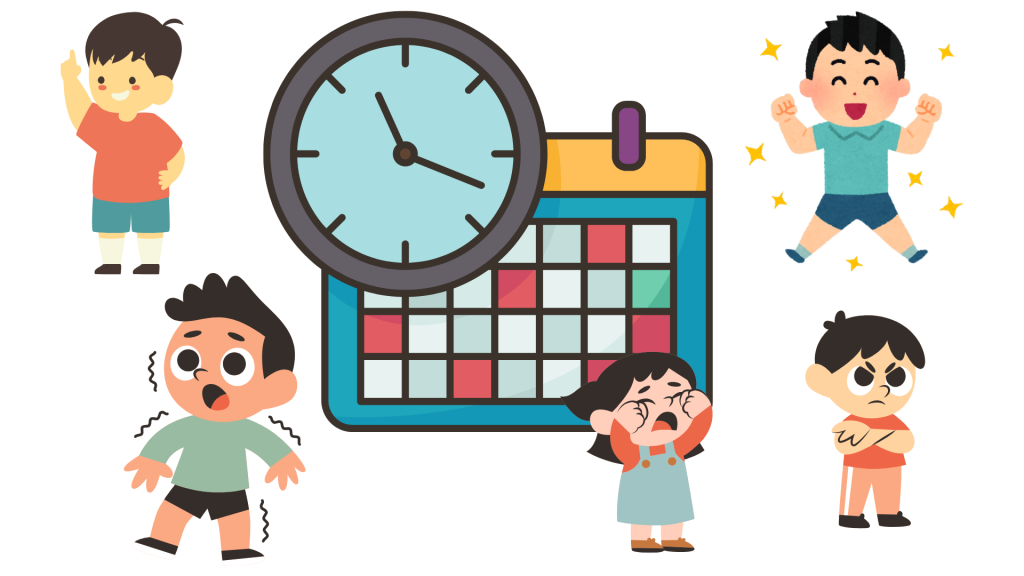
- Ask the child to point to the color that represents how they are feeling.
- Encourage them to talk about their feelings and what might be causing them.
- Often times when experiencing dysregulation and higher-level emotions, it is difficult for kiddos to rationalize, understand, or express their feelings. In these cases, it is better to revisit the emotional experience when your child is in a calm state. Use it as a teaching experience, addressing it at the end of the day or even the next. Take time to reflect and talk about the emotions and situation experienced while using the visual emotion chart.
- After your kiddo gets familiar with the visual chart, the “next step” can be to incorporate coping strategies to help them with regulation. For example, if your child is feeling yellow, they might need a break or a calming activity. If they are feeling orange, they might need to take deep breaths or express their feelings through art or writing. Again, a deeper dive into coping strategies can be addressed in further articles.
5. Make it Personal
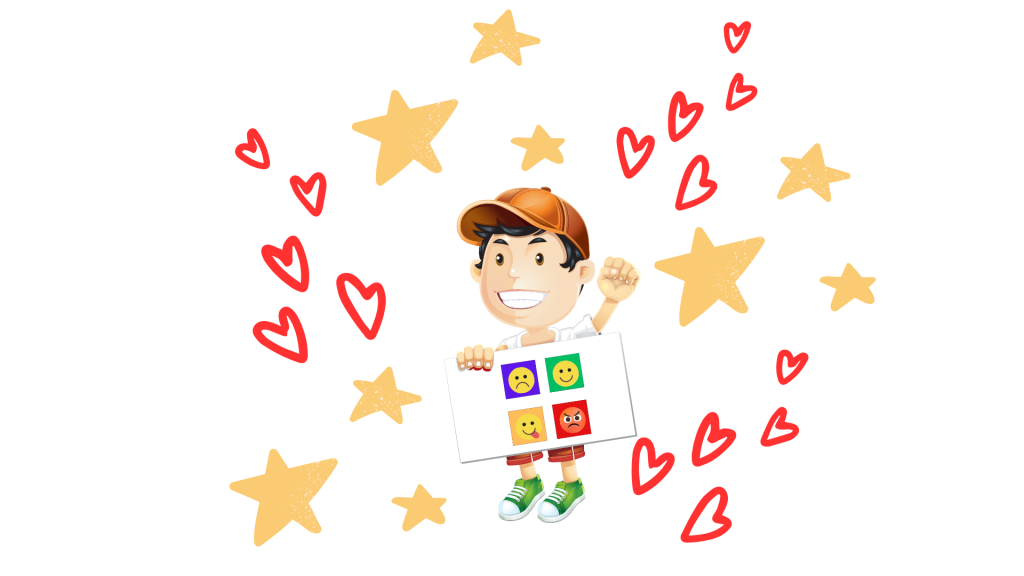
- Allow the child to personalize the chart by adding their own pictures, drawings, or words.
- Use favorite characters that represent each emotion or color.
- Make the chart accessible and visible in the child’s environment, such as their bedroom or classroom.
- Make more than one to have in the car, on the go, or in different areas in your home.
Benefits of Using a Color-Coded Visual Chart
- Helps children understand and identify their emotions.
- It keeps it simple by taking verbal explanations out that may be overwhelming.
- Provides a visual representation of emotional regulation levels.
- Encourages communication about feelings.
- Promotes self-awareness and emotional intelligence
- Supports the development of coping strategies.
Things to Remember:
- Teach your kiddos how to use the visual chart by modeling yourself, relating the “colors” to what others may be feeling, or even relating energy levels to your pets.
- Be patient and understanding as the child learns to use the chart. It may take some time.
- Provide consistent support and encouragement.
- Celebrate their progress and successes.
By using a color-coded visual chart, you can help children develop a greater understanding and awareness of their emotional and regulation levels. Not only will this be beneficial for themselves, but also in the development of their social skills and awareness. Again, remember that this is a process and will take time. Engage your kiddos in the making of the visual chart and incorporate their interests, allowing for “ownership.” And like always, be creative and have fun!
*Disclaimer:
We participate in the Amazon Affiliate Program where a commission is earned on qualifying purchases from sales made from affiliate links within our website. Though we may earn commission, it is at no extra cost to you. We suggest products that may be helpful to you, but there is no obligation to purchase. You know your child the best, so it is up to you to decide if the products will be safe for your child.
No responses yet