
The primary components of the vestibular system are found in the inner ear. The vestibular system is responsible for providing our brain with information about motion, head position, and spatial orientation (body’s awareness in space). It also contributes to motor functions such as balancing, stabilizing our head and body during movements, and to maintain posture. It helps us understand if we are sitting, laying, standing, tilting, rotating, or moving in a straight line.
Vestibular activities can have either a calming or alerting affect. The type and amount of vestibular activity someone can tolerate and benefit from differ from person to person. Some may find vestibular activities soothing and organizing, while others may find them over-stimulating or disorienting. It is important to know how your child responds to certain kinds of vestibular input in order to know the intensity of movements, and to know what vestibular input may be best in certain situations.
A good rule of thumb is to always start slowly when performing vestibular activities, and to adjust the activity based on your comfort and your kiddo’s comfort level. Remember, safety is key! Be aware of your surroundings, and take note if your kiddo is feeling dizzy or looking unsteady or uncomfortable.

Swinging
Use various swings or a hammock to provide vestibular input. You can swing your “littles,” holding them in your arms to provide the input.
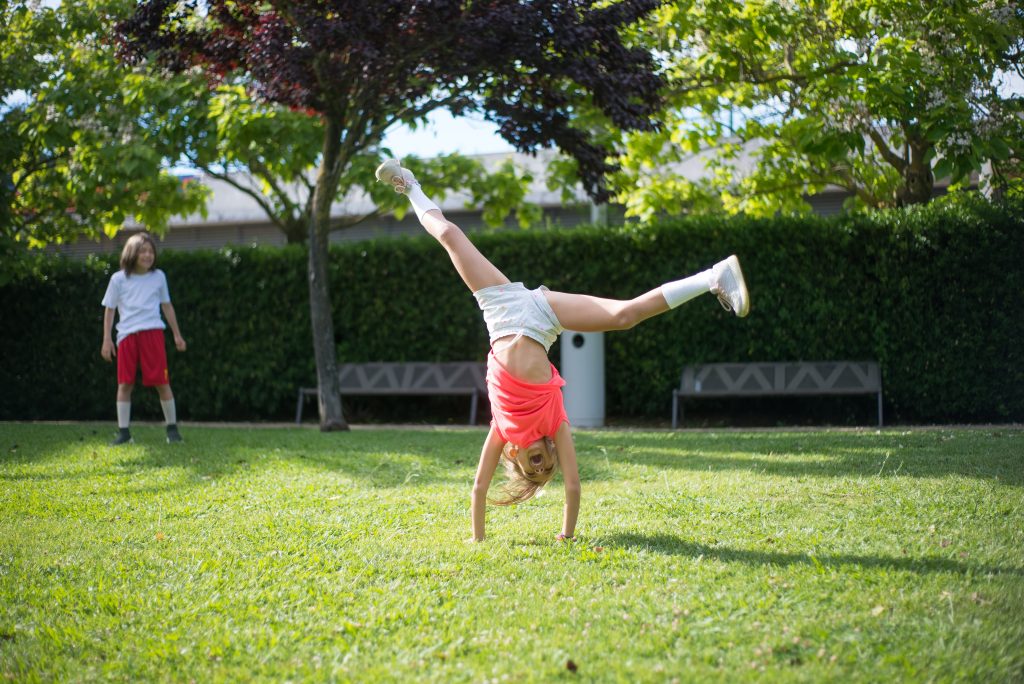
Spinning/Rolling
Stand and twirl while working on balance and coordination. Perform “log rolls,” rolling in a sideways fashion. Think of what we did as kids, rolling sideways down a grassy hill. Perform gymnastics classes. Practice tumbles and somersaults. Use a sit n’ spin, swing, or even an office chair. These can be intense, so be aware of your kiddo’s response.
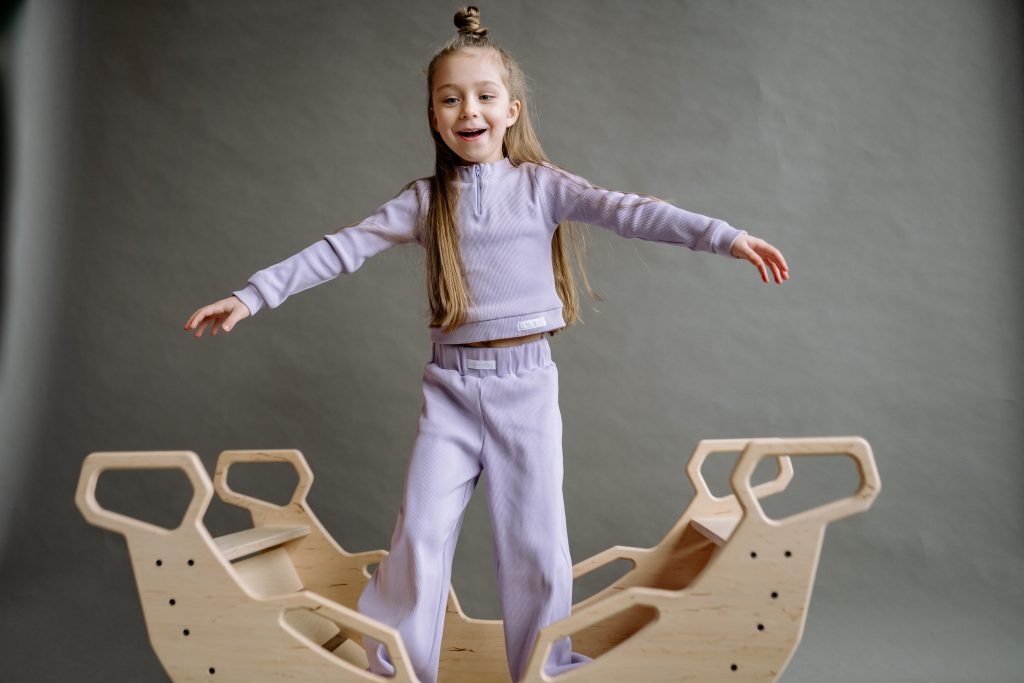
Balance
Walk across balance beams, balance discs, or use a balance board. Stand on one foot!
Jump, Hop, Skip
These involve coordinated and repetitive movements to help stimulate the vestibular system. Jump on a trampoline, make a hop scotch course, skip down the hall, perform animal walks and jumps.
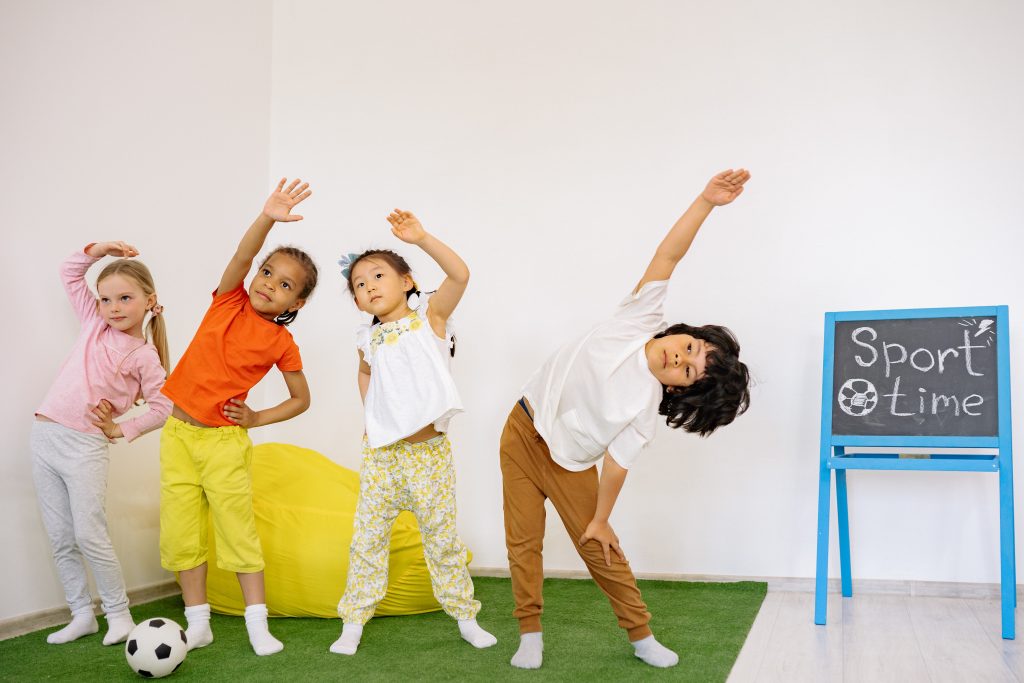
Twist & Bend
Sit in a chair and reach down sideways using one hand to pick toys, puzzle pieces, blocks from the ground and bring to the table, alternating sides. Try to stay seated without falling. Sit on a peanut or therapy ball for added difficulty. Have a dance party or dance battle.
Climbing
Climb trees and jungle gyms. Crawl over cushions or uneven ground.
Rocking
Gentle rocking and swaying such as in a rocking chair or swing can stimulate the vestibular system.
Rock, Roll, Spin, Jump, Swing, Bounce, Twist! Some kids may jump at the chance to engage in vestibular input while others may avoid it all together. Either way, start slow and ease into it. Perform them individually or string them together into an obstacle course. Building vestibular strength and tolerance is important. So, set guidelines for those that seek the input and remember that it may calm or excite. Have fun and be safe!
We participate in the Amazon Affiliate Program where a commission is earned on qualifying purchases from sales made from affiliate links within our website. Though we may earn commission, it is at no extra cost to you. We suggest products that may be helpful to you, but there is no obligation to purchase. You know your child the best, so it is up to you to decide if the products will be safe for your child.
No responses yet