
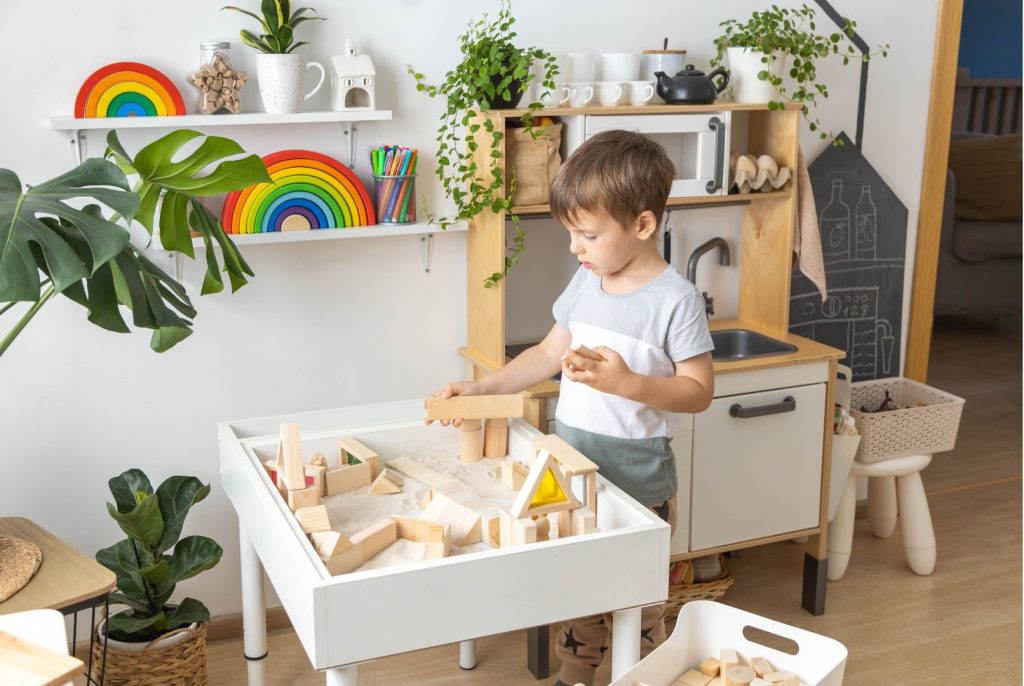
Calm down spaces serve as a personal sanctuary for children to take a break from the demands of their environment, process their emotions, and regulate their sensory needs. This supports their overall development, learning, and well-being. In OT, we often recommend such spaces as part of sensory integration therapy or to support self-regulation in children who experience sensory processing issues or have difficulty managing their emotions.
Creating a calm down space or a portable calm down bin for on-the-go requires selecting items that can help soothe and regulate a child’s sensory system. The choice of items might vary based on individual preferences, sensory profiles, and the specific needs of each child. Here are some items that are generally beneficial for calm down spaces:
Tactile Items:
- Textured Items: Soft blankets, smooth stones, or various fabrics with different textures.
- Comfortable Seating: Bean bags, cushions, foam chairs, or a small tent or canopy to provide a cozy and defined space.
- Weighted Items: Weighted blankets, weighted lap pads, or weighted stuffed animals for deep pressure input.
- Fidget Toys: Squishy stress balls, fidget spinners, silicone bubble pop toys, or tactile puzzles.
- Manipulatives: Playdough, slime, or kinetic sand for tactile exploration.
- Sensory Brushes or Textured Fabrics: For those who benefit from tactile input.
Visual Items:
- Visual Stimuli: Lava lamps, water tubes, liquid motion bubblers, glitter jars, or snow globes can be soothing to watch.
- Soft Lighting: Dimmable lamps, string lights, fiber optic lights, fairy lights, or a night light with a soft glow.
- Soothing Imagery: Posters or pictures of calming scenes like nature or outer space.
- Calm Down Bottles: Filled with glitter and liquid for children to shake and watch as the contents slowly settle.
Auditory Items:
- Soothing Sounds: Sound machine with nature sounds, soft music, or a small water fountain.
- Noise-Canceling Headphones: To reduce ambient noise and create a quieter space.
- Musical Instruments: Gentle instruments like ocean drums, rain sticks, or chimes.
- Noise-Cancelling Headphones or Soft Music: To block out overwhelming sounds or to listen to calming music or nature sounds.
Olfactory Items:
- Aromatherapy: Diffusers with calming essential oils like lavender or vanilla, or scented plush toys.
- Scented Lotions or Scented Markers: As long as they are not overwhelming and are preferred by the child.
- Scented Pillows: Small pillows or sachets with dried herbs or calming scents.
Oral Motor Items:
- Oral Sensory Items: Chewelry, chewing gum, tic-tacs, or textured chewable tubes for children seeking oral sensory input.
- Snack Corner: A small area with access to water and calming snacks with crunchy, chewy, or soft textures.
- Breathing Exercises: Cards or posters that guide kids on slow and deep breathing techniques.
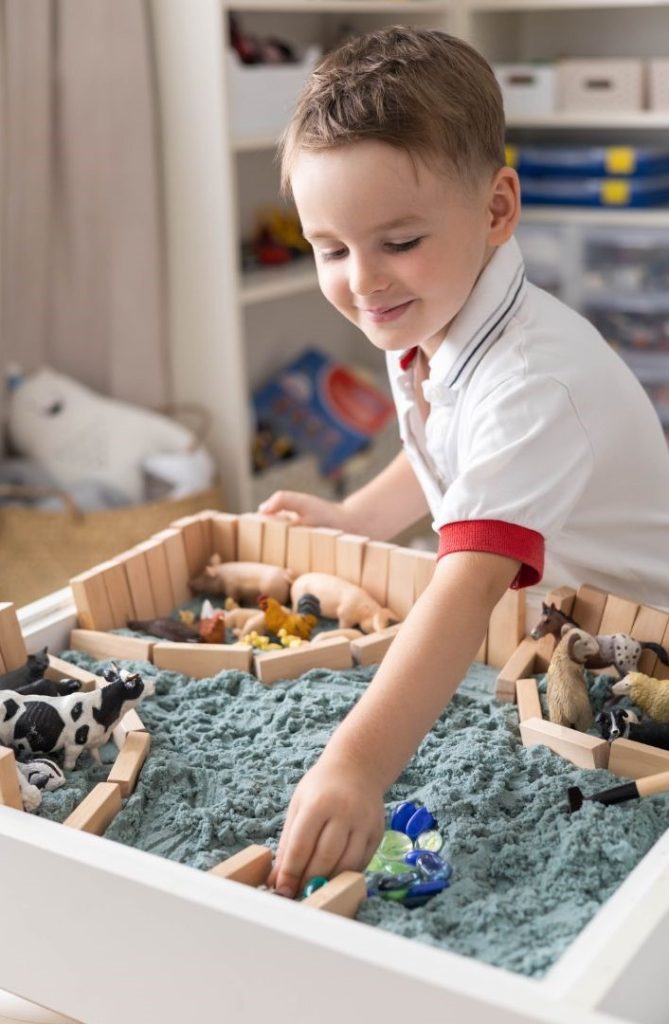
In addition, calm down bins can be used for on-the-go to help children manage overwhelming emotions and return to a state of calm. Regulation calm down bins are personalized containers filled with therapeutic sensory items designed to help children cope with stress, anxiety, or sensory overload. They serve as a resource for children to independently choose tools that provide the sensory input they need to self-regulate.
What to Include in a Regulation Calm Down Bin:
The contents of a calm down bin can vary based on the child’s specific sensory needs, preferences, and what naturally calms them. Here are some common categories and items to consider including:
Tactile Items:
- Fidget toys like fidget spinners, Pop-Its, fidget bracelets, or tactile sand can provide a positive distraction and help focus.
- Textured fabrics or blankets have a soothing effect when touched or held.
- Small Stress Balls: Easily held in one hand and manipulated for stress relief.
- Small Weighted Items: Such as a weighted plush toy or lap pad to provide proprioceptive input for grounding and security.
Visual Tools:
- Liquid motion timers or Liquid fidgets: provide gentle visual stimulation with slow and predictable movements.
- Glow sticks or fibre optic lights: fascinate and distract a restless mind.
- Pictures or Cards: prompt deep breathing or other calming strategies.
- Sunglasses or Hats: to reduce overwhelming visual input from bright lights.
- Small Notebooks or Coloring Books: with crayons or markers for calming creative expression.
Auditory Solutions:
- Noise-canceling headphones: to minimize auditory overload.
- Musical toys or a wind-up music box: can provide calming auditory feedback.
- Headphones or Earplugs: Tt block out overwhelming noise in noisy environments.
Olfactory Inputs:
- Essential oil diffusers: with child-safe oils may be soothing
- Aromatherapy: Scented stuffed animals, playdough, or bracelets with calming essential oils like lavender or chamomile.
Oral-Motor Items:
- Chewable jewelry or toys for those who find oral stimulation soothing.
- Bubble blow or a harmonica: can be a playful way to encourage deep breathing, which promotes relaxation.
- Gum, tic-tacs or other food items: To provide oral sensory input on the go.
Movement-Based Options:
- Balance cushions or wiggle seats which allow for safe movement.
- Stretchy bands or resistance tunnels to provide proprioceptive input, which can be organizing and calming.
Implementing the Use of Calm Down Tools
For regulation calm down spaces and bins to be most effective, children should be introduced to these tools when they are calm. They should be educated on how to use each item safely and how it might help them. Children should be encouraged to familiarize themselves with their bin during moments of calm so they can effectively utilize it during times of distress.
Tips for Success:
- Personalize the Bin: Include items that cater to the child’s preferences.
- Safety First: Ensure all items are safe and appropriate for the child’s age and development.
- Accessibility: Place the bin somewhere accessible to the child, but in a controlled environment.
- Guidance and Practice: Teach children how to use the items through modeling and practice during therapy sessions.
- Parent/Teacher Involvement: Educate parents and educators on how to support the child in using the calm down bin.
Remember, the goal is to empower children with tools for self-regulation, fostering independence, and helping them navigate their emotions in a positive, therapeutic way. By integrating sensory items that cater to individual needs, a regulation calm down bin can be a sanctuary for a child seeking solace from the sensory chaos of the world around them.
No responses yet